Over the course of 50 years of establishment and development, Ho Chi Minh City University of Law (ULAW) has continuously affirmed its stature as one of Vietnam’s foremost institutions for legal education.
Looking back on three years of implementing Resolution No. 41/NQ-HĐT on the “Development Strategy of Ho Chi Minh City University of Law to 2030, with a Vision to 2045” for the 2022–2025 period, ULAW has achieved significant breakthroughs across all strategic pillars—from the quality of education and scientific research to faculty development, international cooperation, infrastructure modernization, and digital transformation. These accomplishments have not only strengthened ULAW’s institutional standing and brand reputation, but have also established a solid foundation for the University to expand its regional presence and make meaningful contributions to the socio-economic development of Ho Chi Minh City and Vietnam as a whole.
Innovating Academic Programs and Ensuring Comprehensive Quality
As part of its strategy to strengthen institutional standing and reputation, ULAW has consistently regarded educational quality as a core value. As of May 31, 2026, the University’s undergraduate enrolment stood at 12,426 students, reflecting stable and sustainable growth. The ratio of full-time students to full-time-equivalent faculty members ranged from 19.66 to 22.21, fully meeting the rigorous standards prescribed by the Ministry of Education and Training.
Public confidence in ULAW is further demonstrated by the sustained growth in full-time enrolment. The number of full-time students pursuing their first undergraduate degree increased by an average of 11.3% annually, while enrolment in full-time second-degree programs recorded particularly strong growth, averaging 25.6% per year.
In response to the increasing demands of international integration, ULAW officially introduced an English-taught undergraduate program in International Trade Law, to be implemented from the 2026 admissions cohort. Under the program, 21 of the 87 credits comprising the disciplinary foundation and core curriculum are delivered in English. This initiative is designed to provide the labour market with highly qualified legal professionals equipped with strong foreign-language proficiency and the competencies required to work effectively in a global environment.
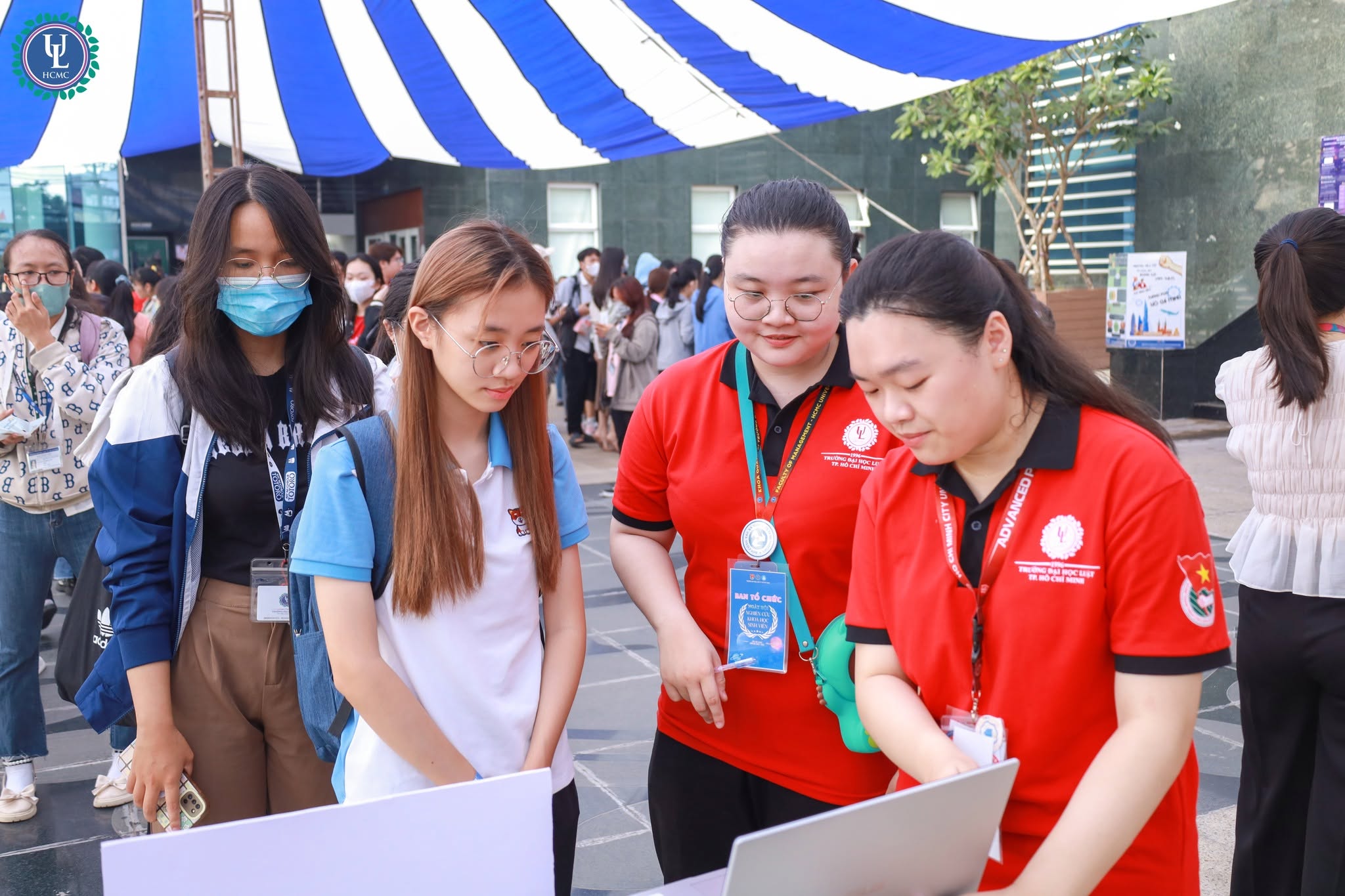
ULAW students participating in scientific research activities at the 28th Student Scientific Research Festival.
Alongside its full-time degree programs, the University has substantially expanded short-term training and advanced professional development. Between 2022 and 2025, the Institute for Training and Continuing Education organized 147 legal training courses, averaging between 2.4 and 3.75 courses per month—far exceeding the targets originally set.
At the same time, ULAW has developed effective cooperation with the Intellectual Property Office of Viet Nam (IP Viet Nam) in delivering advanced intellectual property training programs in Hanoi, Ho Chi Minh City, and other localities, thereby reinforcing the University’s role in connecting legal knowledge and expertise with the wider community.
Breakthroughs in Scientific Research, Knowledge Dissemination, and Policy Contribution
As a highly regarded centre for legal scholarship, ULAW has recorded remarkable growth in international research output. During the 2023–2025 period, the University produced 129 international research outputs, including 86 scientific articles published in prestigious ISI- and Scopus-indexed journals.
Domestically, ULAW faculty members and staff published 630 articles in journals recognized by the State Council for Professorship, in addition to 64 scholarly monographs and reference books.
Research at ULAW is closely aligned with addressing practical challenges confronting the country. The University carried out 149 research projects at various levels, including two State-level projects, 16 ministerial/provincial/municipal-level projects, and 131 University-level projects. Notably, 38% of the University’s Professors and Associate Professors and 65% of its PhD holders directly served as principal investigators or participated in these research projects.
A particularly significant development in ULAW’s research activities and the dissemination of academic value has been the establishment of ULAW Legal Insight—a platform dedicated to providing in-depth legal analysis and expert perspectives on contemporary developments, public policy, and issues arising in current legal practice.
Complementing this initiative, the Legal Elite Award was established as a distinguished recognition of outstanding scholarly works and of individuals and groups whose exceptional contributions have advanced legal scholarship. The Award serves as an important source of inspiration for researchers, faculty members, and learners at ULAW, fostering a culture of innovation, academic excellence, and service to the community.
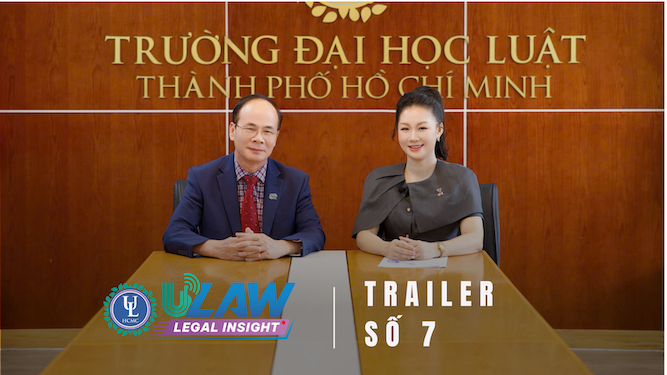
Assoc. Prof. Dr. Vu Van Nhiem – Deputy Secretary of the Party Committee and Vice Rector of ULAW – sharing expert legal analysis and in-depth perspectives in an edition of the ULAW Legal Insight program.
ULAW has also strengthened its role as a hub for academic exchange through the organization of 117 scientific conferences, seminars, and academic dialogues, including 15 international conferences and 15 national-level conferences. These events addressed a wide range of contemporary legal issues, making meaningful contributions to scholarly and social critique, policy dialogue, and the continued improvement of Vietnam’s legal and institutional framework.
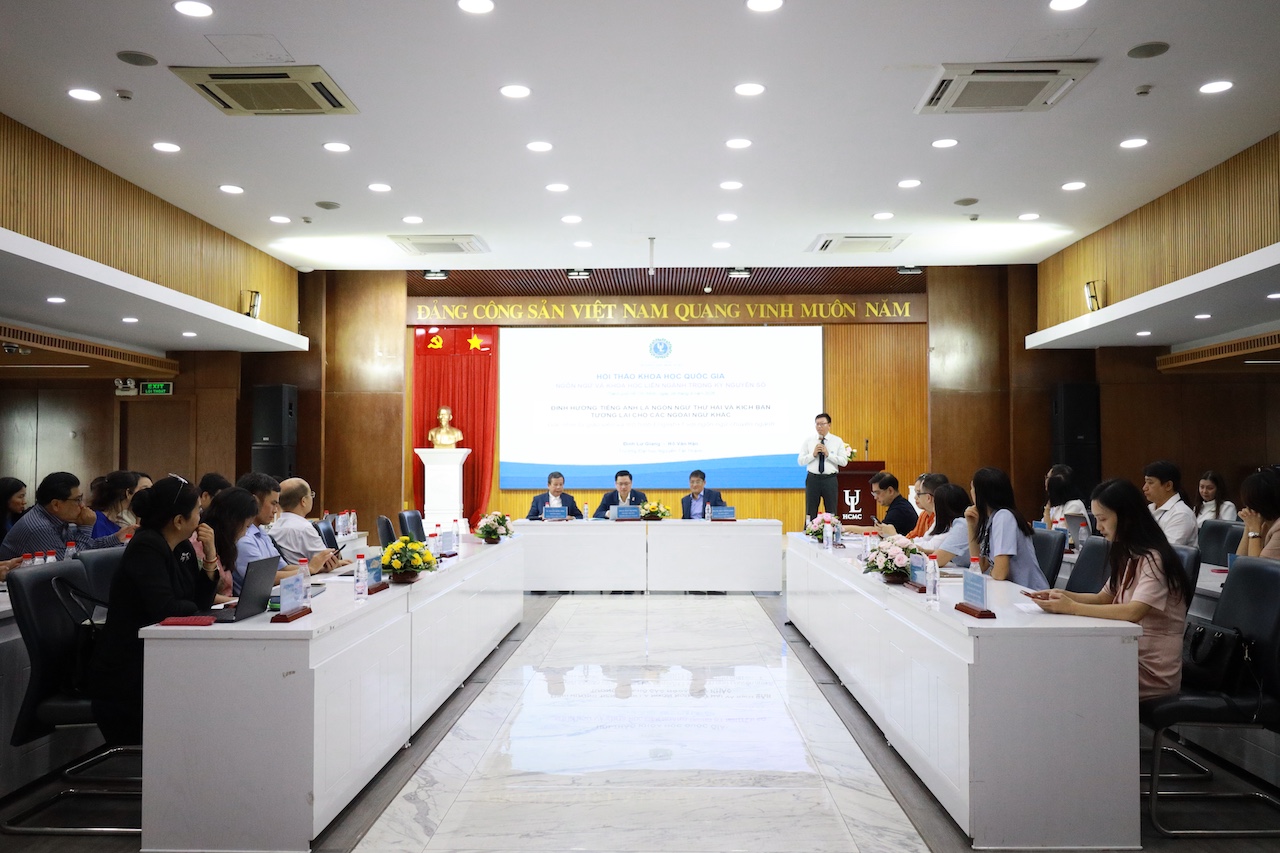
The national scientific conference “Language and Interdisciplinary Sciences in the Digital Era,” organized by ULAW on September 4, 2026.
Developing an Outstanding Faculty and Expanding a Global Cooperation Network
ULAW’s institutional strength is underpinned by a highly qualified and experienced academic community. The University currently has more than 400 full-time faculty members, including 28 Professors and Associate Professors. The proportion of faculty members holding doctoral degrees has reached 41.77%, equivalent to 165 PhD holders, exceeding the 40% target established for the 2022–2025 period.
Notably, 100% of faculty members, managerial staff, and professional officers meet the prescribed standards for foreign-language and information-technology proficiency, enabling them to work, teach, and conduct research effectively in international academic environments.
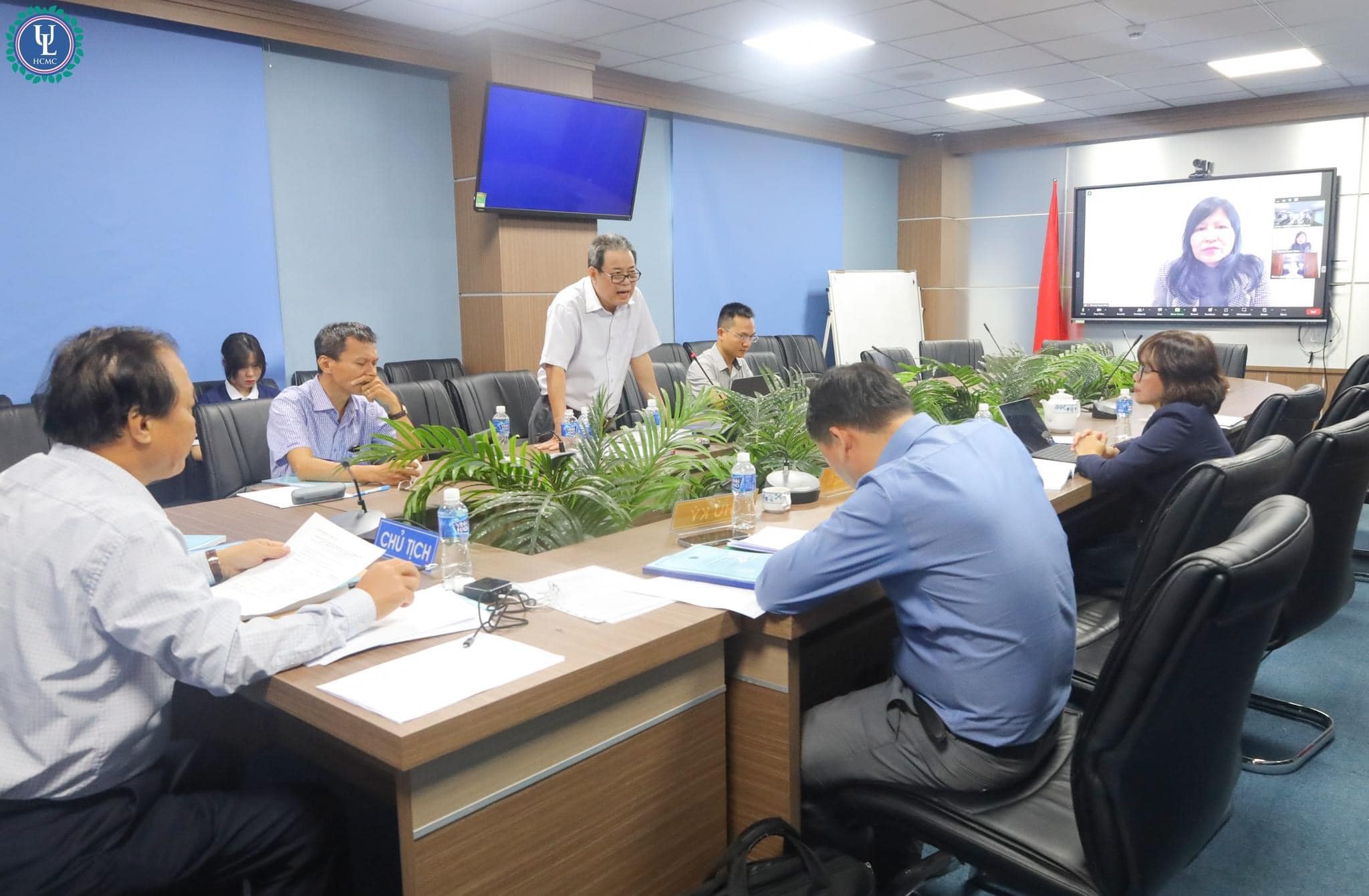
Assoc. Prof. Dr. Nguyen Canh Hop presenting the findings of the ministerial-level research project entitled “Constitutional Responsibility: Theoretical and Practical Foundations.”
Supported by this increasingly qualified academic workforce, ULAW has proactively expanded the scope of its global engagement. The University has signed 35 Memoranda of Understanding and Memoranda of Agreement (MoUs/MoAs) with leading universities and academic institutions in the United States—including the University of Arizona and the University of California, Irvine—as well as institutions in Singapore, including NUS and SMU, and partners in Australia, Japan, South Korea, Canada, Estonia, and other countries. This figure exceeds the original target of 30 agreements.
Domestically, the University maintains 21 cooperation agreements in research and knowledge transfer with public agencies, organizations, and legal practice institutions.
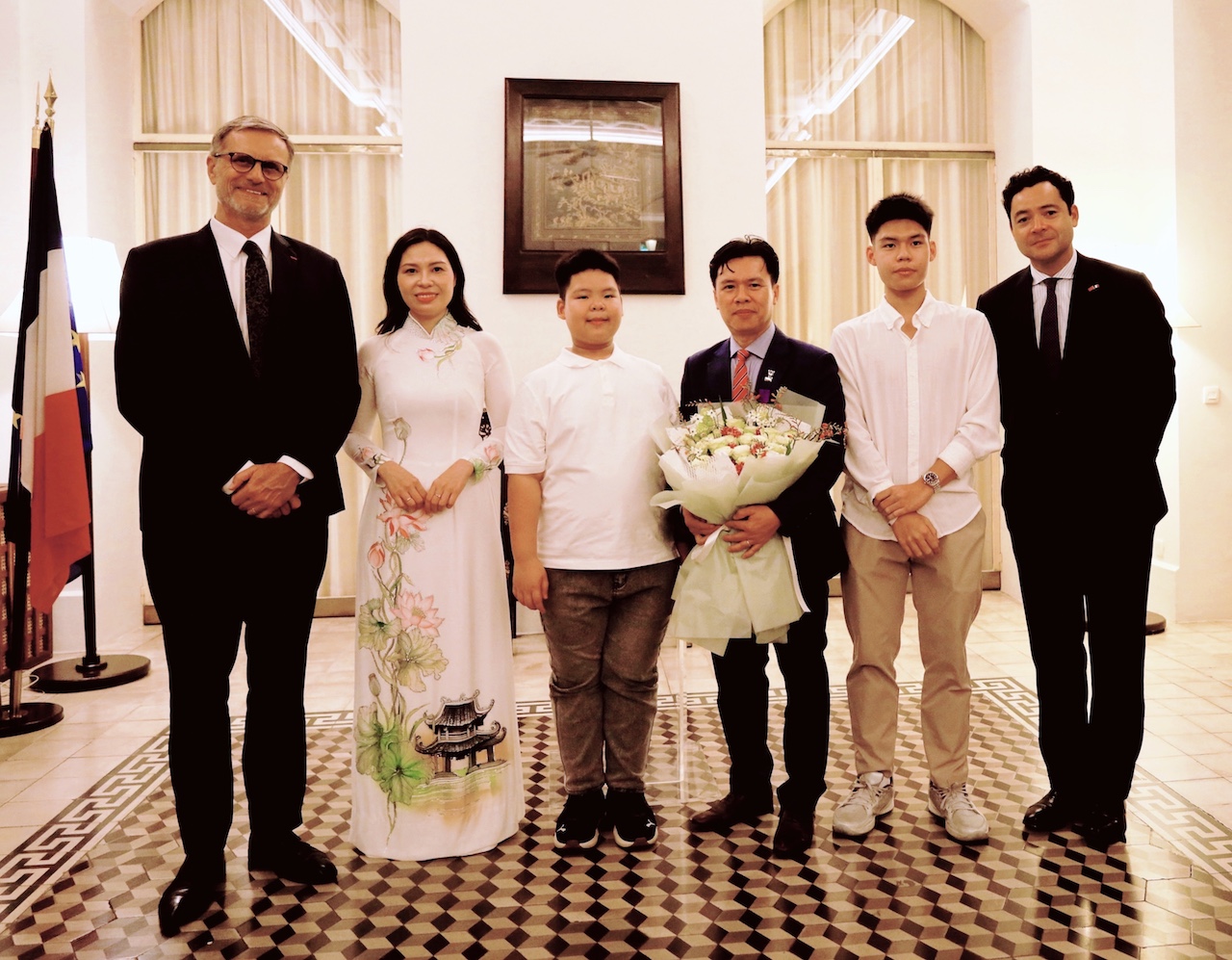
The Ambassador Extraordinary and Plenipotentiary of the French Republic to Viet Nam presenting the Order of Academic Palms to Prof. Dr. Do Van Dai – Vice Rector of ULAW – in recognition of his outstanding contributions to education, scientific research, and the advancement of academic cooperation between Viet Nam and France.
This extensive network has generated tangible outcomes. Thirteen international professors have participated in visiting teaching activities; 23 delegations have taken part in short-term academic exchanges; and 11 international student delegations have come to ULAW for study and exchange programs.
The University has also taken a pioneering role in promoting an innovation and entrepreneurship ecosystem through its participation in the TISC & IP-HUB, H.OIP, and VNEI networks, as well as through its co-founding of the ACL-Innovation Hub Entrepreneurship Network. A project led by ULAW students successfully secured a place among the Top 10 at Univentures 2025.
These developments have also contributed to sustained growth in revenue from training and professional development activities, which exceeded VND 8.87 billion in 2025.
In parallel, ULAW has accelerated digital transformation through the deployment of an E-learning system, Blended Learning methodologies, the UIS-PSC management platform, an electronic office system (e-office), and pilot applications of artificial intelligence in admissions counselling.
One of the most notable achievements is the University’s modern 8,200-square-metre library, which provides 824 seats and 179 computers for information retrieval. The facility integrates RFID technology and an automated borrowing and return system.
The library currently houses 25,713 printed titles comprising 97,787 physical copies, 3,560 internally produced digital resources, and more than 26,200 articles from specialized journals. It also provides access to leading international legal databases and research platforms, including Westlaw, HeinOnline, Oxford Academic, LexCentra, Thư Viện Pháp Luật, and the Turnitin academic integrity platform.

The modern library at ULAW’s Nguyen Tat Thanh Campus.
The achievements recorded during the 2022–2025 period stand as compelling evidence of the intellectual capacity, collective commitment, and ambition of the ULAW community.
As it enters the 2026–2030 period, ULAW remains firmly committed to its goal of becoming a research-oriented, multidisciplinary, and interdisciplinary university, while consolidating its position as a key national centre for legal education and providing high-quality human resources to support the development of Ho Chi Minh City and Vietnam as a whole.
Prepared by: Department of Communications and Enterprise Relation